.png)
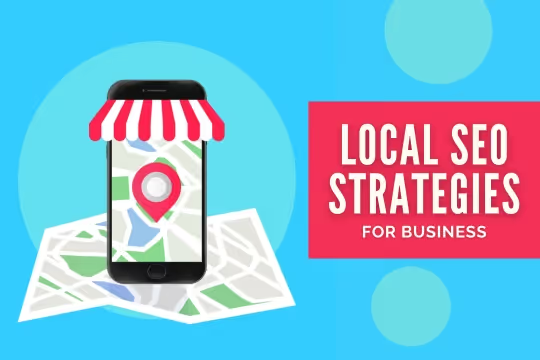
A prospective customer surfs the web, searching for "widgets near me." They are ready to make a buying decision. Everything you have learned in your business courses tells you that this is the customer you want to target. As a result, you want your company to appear prominently in these searches. But does it? How can small businesses rank in local search results and put their companies and products directly in front of buyers? Insiders point to local search engine optimization (SEO) as a key factor. What is it, and how can you harness its benefits for your company? Also, what are some of the mistakes you should avoid?
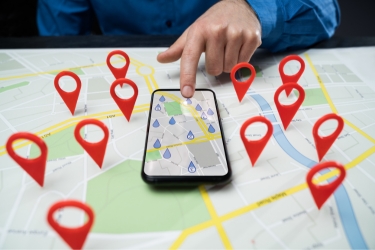
When shoppers enter their search terms, platforms like Google prioritize search results by featuring nearby, relevant businesses. When your company shows up in these search results, it:
Besides these advantages, local SEO improves your company's conversion rates – remember that location is as relevant as a product's availability – and caters to mobile users. After all, local mobile searches typically happen when consumers are driving or walking in the area.
Because local SEO for small businesses relies heavily on Google, it is critical to start with a Google Business Profile. There is a good chance that your listing is already there; however, unless you populate it with details of your company, it will be generic and devoid of local SEO. Therefore, claim your listing, use your exact business name, and choose the most relevant primary category.
Remember that your name, address, and phone number (NAP) must be consistent across the internet. This means that if you present your address as 123 Widget Street, you should not showcase it on your website or on social media as 123 Widget St. With this consistency in mind, select secondary categories, input a keyword-rich business description, and feature your products and services. It is a good idea to upload high-resolution photos of the business location and the interior, along with business hours.
How can small businesses rank in local search results outside their Google profiles? There are other platforms, such as Yelp, Bing Places, and niche-specific websites. The more often you can feature your company listing, the higher the likelihood that it will rank higher on the local search engine results pages.
You most likely have a notation on your website that lists the cities and areas where you operate. That said, it is not enough.
Many small business owners wonder whether blog posts or video uploads are important. Considering that these are fantastic ways for local searchers to find you in their search engine results, it is a good idea. There are plenty of services that can help you put together this type of content.
Additionally, if you have not already, collaborate with your website designers to optimize the content for mobile users. It must load quickly (typically in less than 3 seconds) and include click-to-call buttons. Also, make your address clickable so that mobile users can get directions to your location immediately.

You already know that you will boost local SEO with business citations. It is interesting to note that customer reviews count just as much. The most important reviews of your company will be on your Google Business Profile and Yelp. Many small business owners encourage satisfied customers to leave reviews. It is critical to respond to each review; if nothing else, thank the customer for their business. Moreover, if you notice a negative review, address it professionally and with empathy. Do not stop encouraging customers to review your business.
Of course, do not neglect other citations, such as local directories and Chamber of Commerce listings. Remember to keep your NAP consistent! Moreover, building citations is not something you do once and then never again. As new niche platforms become available, add your information to them. Also, you can always add photos and special notations to your citations.
It is noteworthy that activity on your profiles helps Google evaluate your company's relevance for local searches. For example, you might update your profile with promotions, new products, and photos. Google recognizes that your business is active. If you do nothing after claiming the profile, Google is unlikely to prioritize your listing. In summary, any local SEO ranking factors heavily rely on content quantity, quality, and velocity.
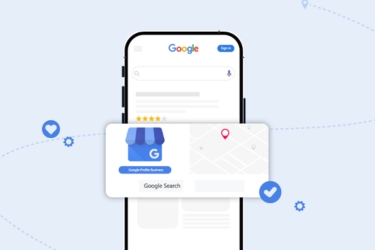
The trick of how to appear in Google Maps is to claim your Google Business Profile. But why is it taking so long? In fact, there are common Google Business Profile optimization mistakes that could hinder your local keyword research strategy right now.
Have you noticed that there are typically three business listings at the top of local search pages? You want to be one of the three. But how can small businesses rank in local search results to such an extent that they are at the top? In addition to the steps we have already mentioned, there are a couple of things that might still be holding you back.
For example, a poor website SEO will automatically reduce your relevance when competitors with a better online presence are nearby. A website or profile without ongoing activity appears dormant, which automatically ranks your company below the nearest competitor with better content velocity.
NAP consistency, local citations, photo uploads, and mobile optimization may seem daunting. However, there are now software tools that – among other things – verify listing accuracy across the internet, build up your local search strategy, and even help you harness the power of artificial intelligence (AI) to help your company stand out.
Let's talk about your professional local search optimization. Schedule a call today!









.avif)