.png)
How do you know that your latest marketing campaign is paying off? It depends on how you measure success. But how do small businesses measure marketing ROI? Are there pitfalls to avoid? And how much time should you give it? And what do all the acronyms mean that economists are so fond of? Your questions – answered.

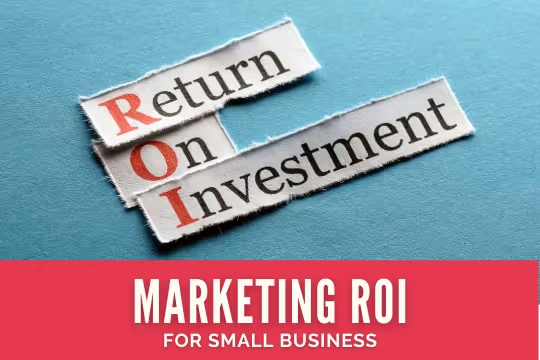
ROI stands for return on investment. What it actually measures is how much money you made compared to how much you had to spend to do so. Because economists like formulas, there is one for ROI, too. It reads as ROI equals money made minus money spent, divided by money spent, and then multiplied by 100. Confused? Don't be.
Let's calculate the ROI on marketing spend using easy numbers. You spent $1,000. You made $5,000. You subtract $1,000 from $5,000, leaving $4,000. Divide $4,000 by $1,000, then multiply the result by 100.
There are three possible results for an ROI calculation.
Obviously, it is critical to review your advertising in examples two and three. But even with example one, there is still room for improvement.
How do small businesses measure marketing ROI in a way that applies to their specific operations? The formula is the same. The question is which figures you use to determine the investment and profit values. The profit must be revenue you can directly attribute to the marketing campaign you are evaluating.
If you are running multiple marketing campaigns simultaneously, it can be challenging to differentiate the profits generated by each campaign. On the investment side, it is easier to break down the expenses. You are looking at ad spend, software expenses, agency fees, distribution costs, and ad production costs. Once you define the values, plug them into the formula.
But how do you know that the latest ad campaign generated the profit, rather than word-of-mouth advertising? How do you account for the effectiveness of social media exposure and anything else that is bringing in sales? The short answer is that you have to choose. Most small businesses focus on a single marketing campaign and attribute all profits to it. It may not be accurate, but it is easy when making advertising decisions.
Another, more balanced approach, gives equal credit to the ad campaign, the website marketing effort, and the interaction with the brand via phone or email. Many small business owners use customer relationship management (CRM) software to manage their customer relationships. This is why clerks may ask, "How did you hear about us?" Another way to track marketing ROI is to include offer codes that specify print, online, or offline advertising. The goal here must be consistency.
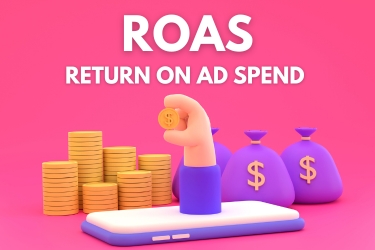
Calculate ROAS by dividing ad revenue by ad spend. It sounds simple. However, keep in mind that ROAS measures the efficiency of an ad. It does not factor in other costs associated with making ad revenue. As a result, this calculation does not account for labor, overhead, and other costs. That said, there are good uses for ROAS calculations. For example, it can help you determine if Google Ads or Meta Ads yield better results. Besides that, campaigns can be compared by calculating ROAS.
Remember, ROAS tells you how well an ad is performing. ROI tells you how well the ad is bringing in revenue.
Let's talk about calculating customer acquisition cost (CAC). It measures the cost to the business of acquiring a new customer. Economists have developed another formula: CAC equals ad spend divided by the number of new customers. Using our earlier example, your ad spend is $1,000. You attracted 5 new customers who completed transactions. Divide $1,000 by 5. Your CAC is $200. Is this good or bad? It depends on your customer lifetime value (CLV).
The customer lifetime value (CLV) quantifies the total profit your company can expect to earn from a customer over the life of the business relationship. The formula economists favor defines CLV as the average sale value multiplied by sale frequency, then multiplied by customer lifespan. If your average product value is $50, most customers make 5 purchases over the course of a year, and most customers stay with you for 2 years, the CLV would be $500.
In our example, CLV exceeds CAC, indicating you are making money. If the figures were reversed, you would be losing money. The lower the CAC, the more profit you make from the customers your ad campaign attracts.
We have already touched on the definitions of the various acronyms. Let's take a look at how these marketing metrics relate to one another.
Knowing the individual values lets you tweak efficiency, cost, value, and overall profitability.
How do small businesses measure marketing ROI when using benchmarks that do not have clever acronyms? Here, it pays to know comparable business statistics. For example, conversion rates track lead quality. Are you getting more customers from your website contact form, social media ads, or the last email campaign? Typical conversion rates are highest for email campaigns and lowest for website contact forms.
Next, there are email marketing benchmarks. How many addressees opened your email, and how many clicked through? Conversely, how many unsubscribed? You will usually find that the lead-to-customer ratio is higher when you work with addressees who have signed up for your emails or are already customers. The commercially available lists do not perform as well. On the other hand, the sheer quantity of names and email addresses may help you if your business is starting out.
Remember to track social media engagement as well. You already know that different consumer demographics prefer different social media platforms. However, gauge the effectiveness of your social media posts. Engagement does not count followers; it focuses on how many times someone interacts with your brand. Average engagement rates are about one percent.
Conversion rates, email marketing success, and social media engagement should be monitored monthly. It allows you to see trends that go beyond the marketing campaigns you are currently investing in.

If you want to stay on top of your marketing spend and budget, you need digital marketing ROI tools. The longer you are in business, the more complicated it gets to determine revenue growth from just one ad campaign. Several software solutions help you track marketing spend and calculate your conversion rate. Each platform brings something different to the table.
For example, Google Analytics is considered the quintessential tool for web and campaign analysis. It is free to use and can be instrumental in measuring ROI from ads and factoring in website behavior. Take it a step further with Google Looker Studio, a dashboard that combines data from Google Analytics, social media, and other sources to create a single ROI report. SEMrush is not an ROI tool per se, but it is invaluable for understanding ad performance and keyword costs. Use it to tweak your company's ROI.
If you do choose to use digital marketing tools, it is critical to be consistent. Being consistent not only means entering the figures you receive religiously; it also means that you interpret findings the same way. The latter can be problematic if multiple workers enter values. Designate one person and define the way they should interpret the data they receive.
In some cases, it is tempting to look at a customer's last interaction with a brand and attribute ad revenue to that particular platform. However, you may miss the bigger picture and a strong influence from another platform altogether.
Confused? Don't be. While you know your business inside and out, we know marketing. Our software services overview showcases tools for hands-on reputation management, social marketing, local search rankings, and even chatbot functionality to capture more leads. Get the marketing values you need quickly and easily. Let's talk about it. Schedule a call today!








.avif)