.png)
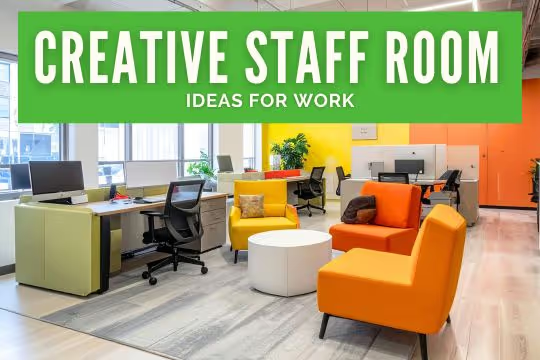
Finding creative staff room design ideas for employee productivity is not just about aesthetics. Instead, they directly affect how well workers recharge, return to their workstations refreshed, and collaborate throughout the day. Many brands are now recognizing that their break rooms need much more than a fresh coat of paint and a few posters. Some businesses are already leading the way with tremendous changes to their work environments and employee lounges. Let's take a look at budget-friendly break room upgrades that your company can implement this week.
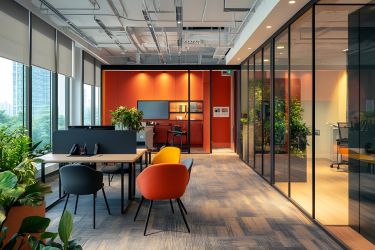
Biophilic is a fancy word for incorporating nature into the constructed environment. There are direct nature exposures via plants, natural light, and water features. Indirect natural elements feature colors found in nature, such as warm earth tones and greens, as well as nature-inspired textures and natural materials like stone, wood, or bamboo.
Biophilic office design is gaining more attention, and it is easy to extend the experience into the staff room. Place multiple types of indoor plants for air quality and offer employees several healthy snack stations. Other budget-friendly options include:
Science agrees with this trend. A study of scientific literature published between 2012 and 2023 notes that bringing nature into the work environment reduces stress. Those evaluating the literature noted the need for creative staff room design ideas to improve employee productivity, focusing on multisensory stimulation and biomorphic forms.
You could opt for a small-scale biophilic design for the staff room. In this scenario, you set up a wellness room that is separate from the break room. While the break room is suitable for socializing and a communal setup, a wellness room is a private, short-term retreat that is quiet, calming, and conducive to meditation. This type of wellness room is a good option for high-stress environments where employees frequently request mental health breaks. Note that the wellness room should exist in addition to a break room.
For companies that want to work with what is already in place and incorporate non-monetary rewards that boost morale, there are also several options. In this scenario, creative staff room design ideas for employee productivity leverage available spaces without requiring extensive construction.
Take your current staff lounge and create distinctive zones for different needs. There is a relaxation space with comfortable seating and softer lighting. Another zone could be for those taking a quick break. Standing tables near vending machines are ideal. A third zone could focus on collaboration. Here, you want to have small tables with movable chairs. Add biophilic elements, such as natural textures or green walls. Moreover, keep amenities centralized. Examples include water stations, coffee machines, and microwaves. Zones should not intrude on one another.
Ergonomic seating is already an important topic for outfitting offices. However, there are also ergonomic furnishings for the break room. Here, you are looking for seating options that support a neutral posture.
If you are considering incorporating ergonomic seating into the staff lounge layout tips we mentioned earlier, you would select different seating for each zone. Lounge chairs are ideal for quiet zones, while modular seating allows for flexible collaboration. Modular furniture ideas include chairs with breathable fabrics and matching tables that have the proper height to prevent hunching. While you could buy them new, consider buying obsolete office furnishings to save money.
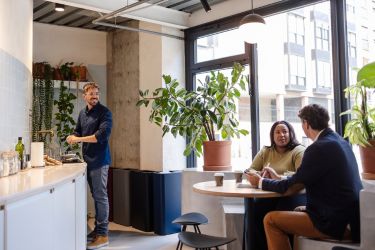
Elevate the break room coffee station into a hub for socializing. Offer coffee, tea, hot chocolate, water, and all necessary condiments in an area near (but not in) the lounge's entryway. Offering more choices for hot and cold beverages boosts employee satisfaction and makes even short breaks enjoyable. Most importantly, the coffee station should be placed away from the zone you choose for quiet enjoyment. By the way, the coffee station is also a fantastic place to feature digital signage for employee recognition.
Incorporating color psychology for productivity can be as inexpensive as painting a few walls. Blue is a calm color that reduces stress and sustains productivity. It is a good choice for meeting rooms and break zones. Green is associated with nature and eases eye strain, making it ideal for jobs that rely on computer screens. If you outfit a wellness room, consider this tone. It is also a good choice for the open seating area of your break room.
If your workplace calls for quick decision-making, red tones work well. You frequently see red in industrial areas to boost safety by keeping employees alert. However, do not overuse red. In an office setting, use it as a splash of color against beige backdrops. Neutral colors like white, beige, and warm gray tones are excellent background colors and reduce visual fatigue.
Some companies have also begun incorporating circadian lighting for offices and break areas. These lighting options adjust illumination intensity and color warmth to support the body's natural sleep-wake cycle. Light that simulates daylight influences melatonin production and regulates cortisol. Employees who stay alert during work hours can reduce the afternoon slump and may also experience fewer headaches and less eye strain.
Another significant improvement for your staff room design involves acoustic treatments for employee lounges. Cafeterias are loud; in contrast, your break room should not be noisy. Quieter environments allow for a cognitive reset by reducing sensory overload or irritation. Use sound-absorbing ceiling tiles, acoustic wall panels for mid-to-high frequently conversation noise, and soft furnishings. Even something as simple as acoustic dividers could make a significant impact and help further define the different zones of your staff lounge layout.
Short breaks – typically 5–20 minutes – are well known to improve employee productivity. One study found that allowing a 5-minute break every 20 minutes improved productivity for 75% of participants. Companies considering this approach might also consider implementing quiet zones and focus pods. Quiet zones can be part of your employee lounge's setup. Focus pods are semi-enclosed workstations that support productivity during video calls or concentrated work. Both can be used for brief periods to help a worker shift gears.

It sounds counterproductive. You want employees to relax and refresh, not stress themselves out. Yet when done correctly, game rooms or recreation areas are ideal for taking mental breaks, reducing stress, fostering team bonding, and boosting creativity. Stay away from electronic games and instead choose tabletop games, puzzles, and ping pong tables.
The most crucial guideline for use is that game zones are for short, intentional breaks rather than extended game sessions. (These could go hand-in-hand with microbreaks.) Employees can mentally disengage (for a short time) from their current tasks by using different parts of the brain for these activities. If you opt for a game zone, think through ways of enforcing time limits. Remember that the goal is a mental shift, not a competitive game of chess.
You do not have to implement each of these ideas right away. In fact, a complete change of the environment is stressful in itself. Instead, plan for small changes throughout the year. If you prioritize color psychology and ergonomic furnishings, you can add the other elements as your budget allows. By going slow, you also have the chance to encourage employee feedback. What would your workers like to see in their lounge area? If it fits in with your goal of boosting productivity, it may be worth a consideration.
How do we know so much about helping companies and employees? We are a digital marketing agency that works specifically with small and mid-sized businesses to level the playing field against larger competitors in their field. We understand that cutting-edge technology and online marketing are only the beginning of this task. Assisting our clients with ideas that large companies already use – but scaled down for a more realistic budget – is another step. One example includes these creative staff room design ideas for employee productivity.
Find out more about our team and approach today. We love to discuss productivity increases with our clients. Schedule a call now!









.avif)