.png)
Running a small business means juggling countless responsibilities. You’re the marketer, the salesperson, the customer service rep, and sometimes even the accountant. But one area many small business owners overlook is upselling. Upselling isn’t about being pushy; rather, it’s about helping your customers discover better solutions while you increase your revenue. When using the best upselling techniques to increase revenue in small businesses, upselling can be a win-win.
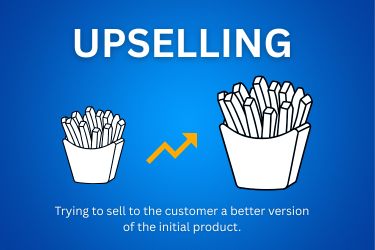
Upselling is one of the most cost-effective ways to grow your business. Unlike acquiring new customers, which can be expensive and time-consuming, upselling focuses on the people who already trust your company. By encouraging them to upgrade or add value to their purchase, you increase their customer lifetime value while strengthening loyalty. Think of it as guiding rather than selling. You’re helping customers make choices that benefit them while improving your bottom line. This is where the debate of upselling vs cross-selling comes in. Cross-selling suggests complementary products, while upselling encourages a higher-end purchase. Both are useful, but upselling often delivers bigger revenue jumps.
Upselling also directly impacts your average order value (AOV). Even small increases in AOV can compound over time, creating significant revenue growth. For example, if your average sale is $50 and you increase it to $60 through upselling, that’s a 20% boost without acquiring a single new customer. For small businesses with limited marketing budgets, this is a game-changer. This is why many owners focus on customer lifetime value upsell strategies, because they maximize the worth of each relationship.
Product bundles are a straightforward way to encourage customers to spend more. Bundles work because they simplify decision-making and highlight value. Customers often feel they are saving money when items are grouped, even if the bundle price is only slightly discounted. For small businesses, bundles also reduce the complexity of selling multiple items separately. They create a sense of convenience and completeness, making customers more likely to make a purchase.
Bundles also encourage loyalty. When customers buy a bundle, they are more likely to return for refills or replacements. This creates a cycle of repeat purchases that strengthens your revenue base. Product bundles for SMBs are particularly effective because they allow you to showcase your range without overwhelming customers.
Post-purchase upsells capitalize on customer momentum. Once someone has completed a transaction, they are in a buying mindset. Offering an additional product or service at this moment feels natural and often leads to higher acceptance rates. The key is relevance. A post-purchase upsell should complement the original purchase, making the customer feel they are enhancing their choice rather than being sold something unrelated.
Post-purchase upsells also build trust. Customers appreciate being offered something that improves their experience. Over time, this strengthens loyalty and increases retention. For small businesses, this is a powerful way to maximize each transaction.
Order bumps are small, low-cost additions offered during checkout. They work because customers are already committed to buying, and adding a small extra feels easy and smart. The simplicity of one-click add-ons makes them effective. For small businesses, order bumps are a low-effort way to increase revenue without complicating the buying process.
Order bump strategies can be one of the best upselling techniques to increase revenue in small businesses and enhance customer satisfaction. Because customers feel that they are personalizing their purchase, it increases engagement. Therefore, creating long-term value is important because the customer will want to come back for more.
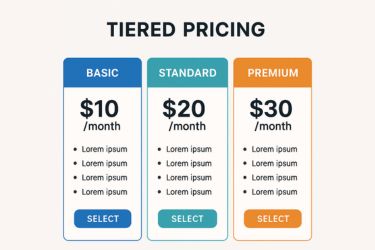
Pricing tiers encourage customers to compare options. When presented with “Basic,” “Pro,” and “Premium,” most customers gravitate toward the middle tier, but many will see the value in upgrading. The upgrade path should clearly state exactly what added benefits come with each higher-tier option. This level of transparency makes for confident customers.
Pricing tiers are a big part of upselling techniques that improve sales. Customers might start with a low-tier service but can aspire to grow into higher tiers as their needs increase. Upgrade path offers make this transition seamless, ensuring customers feel supported at every stage.
Social proof helps ease customers’ concerns that they’re making the right choice in upgrading. Reviews, testimonials, and popularity indicators all help. If people see others have opted for a premium option, they become more likely to choose it too. In the context of small businesses, social proof lends credibility to your upsell, making it feel like a recommendation rather than a sales tactic. Social proof for upselling also reduces hesitation. The customer feels reassured that they’re making a smart choice, increasing the conversion rates.
Personalization makes upselling helpful instead of intrusive. By using customer data, you can suggest upgrades that relate to their preferences. Even the most basic forms of personalization, like recommending products based on past purchases, go a long way. Customers appreciate businesses that understand their needs, and this appreciation translates into higher acceptance of upsell offers.
For companies that rely heavily on face-to-face interaction, personnel training is necessary. Employees must feel at ease to upsell comfortably and naturally. Training can take the form of role-playing, a script, and a way forward to portray value without being pushy. When staff feel confident, so do the customers.
Upselling done ethically respects the feelings of customers. It’s all about value, not manipulation. Offering upgrades that truly benefit them engenders trust and loyalty. Negative pressure should be avoided at all costs. When customers feel guided rather than sold to, they are more likely to return. Ethical upselling guidelines also protect your reputation. Customers talk, and if they feel pressured, word spreads quickly. By focusing on value, you create positive experiences that encourage referrals and word-of-mouth recommendations.

Loyalty programs reward repeat buys, making upselling part of the reward system. By giving customers points or special perks for going premium, they feel incentivised to upgrade. That gamification helps strengthen retention, creating a virtuous upsell/loyalty loop. Loyalty program upsells create exclusivity. Customers feel they’re part of something special, which increases engagement and spending.
Timing is everything when it comes to upselling. Upsell offers that are timed correctly feel natural and more effective. CRM triggers enable a company to tie upsell offers to customer behavior. For instance, sending an upgrade offer to customers reaching a specific milestone in usage ensures relevance. CRM upsell triggers create automation. By implementing this, small businesses do not have to do anything manually and save their time for more revenue.
Upselling works because it taps into customer psychology. People love feeling like they’re getting a deal, which is why bundles and discounts are effective. Social proof reassures them that others have made the same choice, and personalization makes them feel understood. Timing also plays into momentum-once a customer commits to buying, they’re more open to additional purchases. It also includes the contrast effect of psychology, wherein, when there is a premium option beside the basic option, the premium becomes more valuable. This is why tiered pricing turns out to be very effective.
The future of upselling will be all about personalization and technology. AI-driven recommendations will enable small businesses to upsell their customers much more precisely. Dynamic pricing will adjust the offers in real time, social proof will turn into live notifications showing what other people are buying, and loyalty programs will integrate with digital wallets to make upgrades seamless.
Upselling and cross-selling strategies can be some of the best upselling techniques to increase revenue in small businesses. You can offer upgrade possibilities and complementary products, thereby creating a holistic approach that maximizes revenue.
Implementation should be on a small scale. Pick an upselling technique and test it. Results are tracked, and adjustments are made. Train the staff to naturally make upgrade suggestions. Leverage customer data in personalizing offers. Always follow ethical guidelines. Upselling should feel like guidance, not pressure.
Upselling works best when it becomes part of your business culture rather than a one-off tactic. This means embedding upselling into your processes, training, and customer interactions. When staff understand that upselling is about helping customers make better choices, they approach it with confidence and authenticity. Customers then perceive upselling as guidance rather than pressure.
This does take consistency to create such a culture. Each customer touchpoint should offer an opportunity to add value. Whether it’s through digital prompts, loyalty programs, or in-person conversations, the upselling should feel natural and mirror your brand values. Over time, this consistency creates trust and makes upselling a seamless part of your customer experience.
While CRM systems enable you to track these metrics, even simple spreadsheets can help you draw insight from data. The secret is consistency of measurement and data-driven adjustments, so your upselling is kept relevant to customers’ needs and business objectives.
While upselling is powerful, there are pitfalls to avoid. Probably the biggest common mistake is offering irrelevant upgrades. Customers quickly lose trust if they feel you’re pushing products that don’t fit their needs. Another mistake is overwhelming customers with too many options. Simplicity is key. Focus on one or two relevant upsells rather than a long list.
Upselling doesn’t exist in isolation. It should be integrated with your broader marketing strategy. For example, email campaigns can highlight premium options, loyalty programs can reward upgrades, and social media can showcase testimonials for higher-tier products. By aligning upselling with marketing, you create a consistent message that reinforces value. This integration also makes upselling more effective. Customers who see consistent messaging across channels are more likely to trust your recommendations. In small businesses, this alignment ensures upselling feels like part of the overall customer journey.
Upselling is not only about revenue, but it’s also about loyalty. When your customers believe that upgrades actually enhance their experience, they trust your business more. This translates into repeat purchases and referrals. Upsells in loyalty programs reinforce this by rewarding the customers for choosing premium options. Over time, upselling nurtures customer relationships; valued customers are more likely to stay with your company and increase their lifetime value. That makes upselling a strategy for long-term growth, not some sort of quick trick.
You don’t have to have a big marketing budget to grow your business. Be it product bundling, post-purchase offers, or personalization of recommendations, upselling is about guiding rather than pushing your customers toward better choices. Ready for the next step? To learn more about how you can start putting these methods into practice in your business, check out our marketing products overview








.avif)