.png)
Remember when marketing meant hiring an agency, crossing your fingers, and hoping your ad budget didn't disappear into a black hole? Those days aren't completely gone, but they're fading fast. If you've noticed your competitors suddenly popping up everywhere, personalizing their emails like they know your customers better than you do, or ranking higher on Google without seemingly trying harder, there's a good chance artificial intelligence has something to do with it.
Understanding how artificial intelligence is changing small business marketing isn't just a nice-to-have anymore. It's becoming the difference between businesses that grow steadily and businesses that get left behind, wondering what happened. The good news? You don't need a massive budget or a computer science degree to take advantage of it. You just need to know where to start.
Let's break down what's actually happening, why it matters to you, and how you can start using these tools without feeling overwhelmed.

For years, the tools that gave big corporations their competitive edge were locked behind massive paywalls and price tags. These included sophisticated customer targeting, predictive analytics, and personalized advertising at scale. In fact, these were things only companies with seven-figure marketing departments could pull off. Small business owners were stuck doing their best with spreadsheets, gut instinct, and whatever free time they had left after running the actual business.
That gap is closing quickly. Artificial intelligence for small businesses has leveled up the playing field in ways that genuinely feel like a turning point rather than a passing trend. You now have access to tools that analyze customer behavior, write compelling ad copy, optimize your website for search engines, and manage your social media calendar, often for less than the cost of a single employee's monthly salary.
This is exactly how artificial intelligence is changing small business marketing at its core. It's taking capabilities that used to require entire teams and putting them into software you can run from your laptop between customer calls.
Think about how much of your day gets eaten up by repetitive marketing tasks. Writing social captions, scheduling posts, responding to the same customer questions, drafting email newsletters, and tweaking ad copy for the fifth time because the first four versions didn't perform well. None of that work is impossible, but it's far too time-consuming, and time is the one resource you can never get more of.
Generative AI marketing tools have stepped in to handle much of the heavy lifting. You can generate a week's worth of social content in the time it used to take to write one caption. You can draft SEO-rich blog posts, captivating product descriptions, and email sequences that sound like you, not like a mindless robot, because these tools have gotten remarkably good at matching your tone and voice when you guide them properly.
This doesn't mean AI replaces your creativity or your understanding of your target customers. What it does is clear away all of the busywork so you can spend your time and energy on strategy, relationships, and the parts of your business that actually need a human touch. Small business AI automation isn't about removing people from the process. It's about freeing them up to do the things machines still can't do well, like building genuine trust with a customer or making a judgment call based on years of experience.
One of the most dramatic shifts has happened in audience segmentation. In the past, targeting your ideal customer meant making broad guesses, which sometimes missed the mark. Maybe you assumed your typical buyer was a woman between 35 and 50 who lived within twenty miles of your store. That guess might have been close, or it might have been way off, and you often wouldn't know until months of ad spend had already gone out the door.
AI customer targeting works differently. These systems analyze real behavior, not assumptions. They look at purchase history, browsing patterns, engagement rates, and dozens of other signals to figure out who's actually most likely to buy from you, and when they're most likely to do it. That means your ad dollars stop getting wasted on people who were never going to convert in the first place.
Predictive analytics for small businesses takes this even further by forecasting what's likely to happen next. Which customers are at risk of churning? Which products are about to trend in your area? When should you ramp up inventory or launch a promotion? These aren't crystal ball predictions pulled from nowhere. They're calculated estimates based on patterns in your own data, and they give you a serious edge in planning ahead instead of constantly reacting without a solid plan.
If you've ever wondered how artificial intelligence is changing small business marketing on a practical, day-to-day level, this is probably the clearest example. It's turning marketing from an ongoing guessing game into something closer to a science, without requiring you to become a data analyst yourself or hire another employee.

Email marketing has been around forever, and plenty of business owners assume it's lost its punch in a world dominated by social media. However, that couldn't be further from the truth. AI-driven email marketing personalization for small businesses has actually made email one of the most powerful tools in your marketing arsenal again.
Instead of blasting the same generic newsletter to your entire list, AI tools can now automatically segment your subscribers and tailor the content each person receives based on their behavior. Someone who abandoned a cart gets a different message than someone who just made their third purchase. A customer who always buys in the spring gets a nudge right when they're most likely to be ready to buy again.
Automated email sequences used to require extensive manual setup and constant tweaking.
Now the software learns from open rates, click-through patterns, and purchase behavior, then adjusts the timing and content on its own to improve results over time. You set the general direction, and the system fine-tunes the details. That kind of ongoing optimization used to be reserved for companies with dedicated email marketing specialists on staff, all of whom were paid.
If you've felt like SEO has gotten more confusing over the past couple of years, you're not imagining things. Search engines themselves are increasingly powered by AI, and that has changed what it takes to show up in search results. Modern SEO strategies using artificial intelligence go far beyond stuffing random keywords into a page and hoping for the best.
Today's approach involves understanding intent. What is someone actually trying to accomplish when they type a question into Google? AI tools can analyze search patterns and help you structure your website content to answer those real questions clearly and thoroughly, which is exactly what modern search algorithms are looking for.
Local search strategies have benefited enormously from this shift as well. If you run a small business that depends on nearby customers walking through your door, AI-powered tools can help you optimize your Google Business Profile, generate location-specific content, and identify the exact phrases people in your area are searching for when they need what you have to offer. This kind of precision used to take hours of manual research and labor. Now it can happen in minutes with a high level of accuracy.
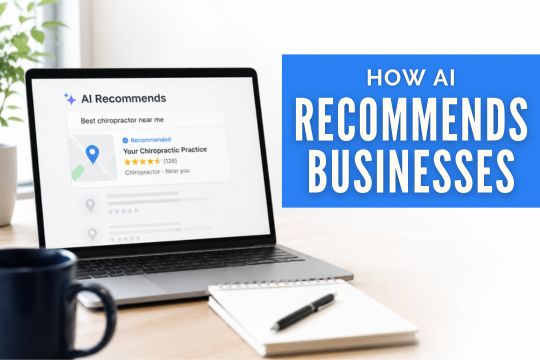
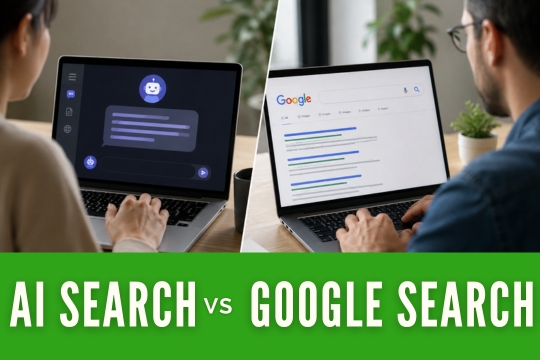
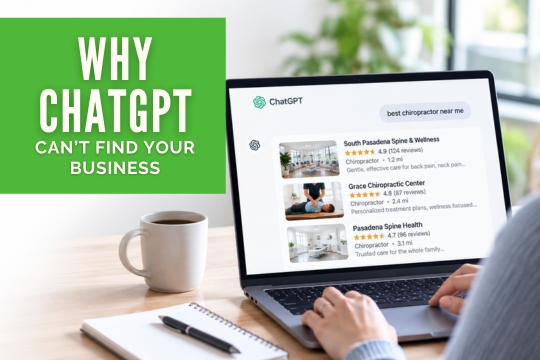
There's also a newer piece of this puzzle worth paying attention to. As more people start using AI-powered search tools and chatbots to find businesses, showing up in those results matters just as much as ranking on a traditional search engine page. That's a shift a lot of small business owners haven't fully caught on to yet, which means there's a real opportunity for those who move early.
Here's the part that probably matters most to you as a small business owner. None of this requires an enterprise budget. Low-cost AI marketing tools for small business owners have flooded the market over the past few years, and many of them are genuinely effective, not just watered-down versions of expensive enterprise software.
You can find AI content tools that help you write faster, image generators that create custom graphics without a designer, chatbots that handle customer service questions around the clock, and analytics dashboards that translate confusing data into plain language recommendations. Many of these tools also offer free trials or affordable monthly plans that scale with your business as you grow.
The key is choosing tools that solve a specific problem you're actually facing, rather than subscribing to multiple software tools just because they sound impressive. Ask yourself what's eating up the most time in your marketing routine right now, then look for a tool built specifically to handle that task well. As your business grows, you can expand your choice of AI tools as well.
Individual tools are great, but the real magic happens when you connect them into a cohesive system. Marketing workflow automation ties your email campaigns, social posting, ad targeting, and lead follow-up into a single connected process rather than a bunch of disconnected tasks you manage separately.
This is where things start to feel less like using software and more like having an extra team member who never needs to sleep. A new lead fills out a form on your website, and within seconds, they're added to your email list, tagged based on their interests, and sent a personalized welcome sequence. Meanwhile, your dedicated sales team is automatically notified so they can follow up at exactly the right moment.
Speaking of leads, this connects directly to something we've covered in detail before. If you want to see how these pieces fit together from the moment someone shows interest to the moment they become a paying customer, take a look at our breakdown of automated lead generation and sales funnel management. It walks through exactly how automation and smart follow-up work hand in hand to turn casual interest into returning customers and real revenue.
It's easy to look at all of this and feel a little overwhelmed, especially if you're already stretched thin running your day-to-day operations. However, all you need to do is take a breath because you don't need to adopt every tool at once. Start small and pick one area where AI could save you meaningful time or improve your results. Whether that's email personalization, content creation, or better ad targeting, choose what you need most now. Get comfortable with it, see the results, and then expand from there once it’s needed.
The businesses that thrive over the next several years won't necessarily be the ones with the biggest budgets. They'll be the ones willing to experiment, learn, and adapt as these tools continue to evolve. That's genuinely good news for small business owners, especially since agility has always been one of your biggest advantages over larger, slower-moving competitors.
At the end of the day, how artificial intelligence is changing small business marketing comes down to one simple idea. It's giving you access to capabilities that were once reserved for companies with far deeper pockets and much larger teams. Smarter targeting, faster content creation, more personalized customer experiences, and sharper insights into what's actually working are no longer out of reach.
You don't have to master every AI tool or chase every new trend that pops up. What matters is staying curious, testing what fits your business, and building on the wins as they come.
The marketing world is changing fast, and the businesses that lean into these changes now will be in a much stronger position down the road. If you're ready to make sure your small business shows up where your target customers are actually looking, it's worth paying attention to how search behavior itself is evolving alongside these AI tools. Improving your AI visibility for small business websites is one of the smartest moves you can make right now, and it's exactly the kind of thing our team at E-Marketing Associates specializes in helping small businesses figure out, one practical, result-driven step at a time.





.avif)